
The Leadership Field has a Bullshit Problem
There’s bullshit afoot. First, the shit. Second, what comes next.
I’ve clocked over a decade in this space.
The ways I approach my work as a leader, my writing for The Updraft, and my work as a co-founder for Kestryl Edge are motivated by the problems I have with the self-help and leadership field:
-
There’s too much unrelatable narrative.
-
The books aren’t a handy reference. The [Usable content] to [Length] ratio is off.
-
Lack of references and research.
-
“Just be yourself authenticity narratives.”
-
Use of jargon leads to ethereal and insubstantive content.

Too much unrelatable narrative.
Humankind are beings of story. Story is how we learn, share, love, and know ourselves.
To make a point, your narrative needs to have through-line and it must relatable to the audience.
What people miss is that their audience is predominantly team leads and middle management… not CXOs. We’re mostly writing to people who are in the struggle to become leaders. Not people who are proven (lol) leaders themselves.
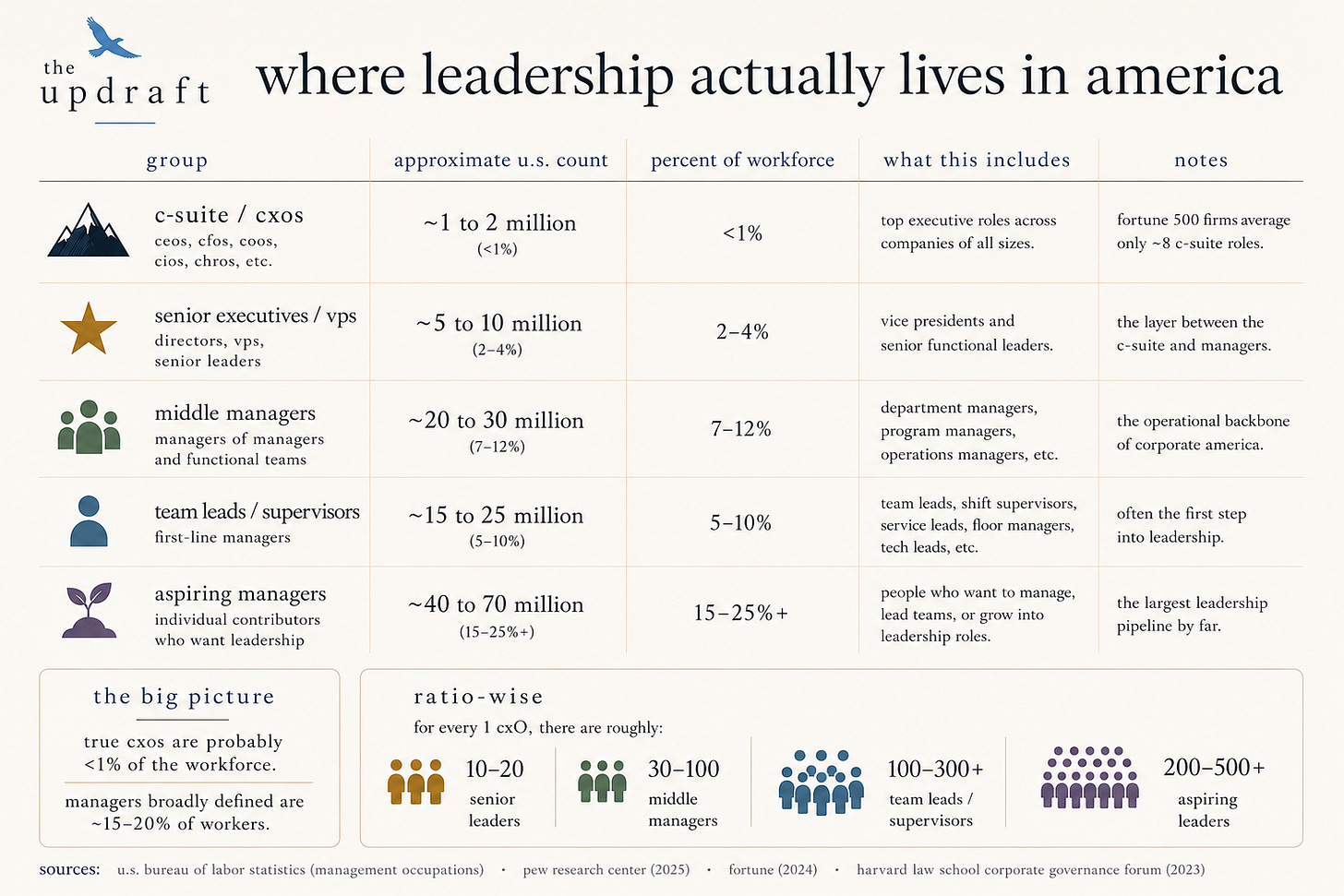
Narratives need to be relatable to the aspiring manager and the middle manager.
It’s not a secret, senior leaders are typically the most resistant to change. Many I run into aren’t looking for training on how to boost their emotional intelligence capacity. Despite EQ being the #1 determiner of leader success (Goleman, 1998. Riggio, 2008).
Have friends who are in management? Share this with them.
If you have a senior leader who is EQ continuous and working on themselves… congratulations! You’ve found a Unicorn Manager. Send them our way so we can get them in our network.
“The most effective leaders are all alike in one crucial way: they all have a high degree of emotional intelligence.” — Daniel Goleman
The way I see it we’re trying to educate the next wave of leadership so that in 10-20 years the world is a different place.
Write for those who come next. Give them the nitty gritty, the useful bits. Not stories from the tippy top. Lead by example. Show that there is a better way.
Not a handy reference.
The best books change your mind, are the well-worn, dog-eared, annotated, sticky-noted, and coffee-stained. They survive move after move and job after job.
With AI, you could just go ask the internet to do your thinking for you. And in many situations this is a great idea. But AI can’t do your emotional regulation for you.
The more AI integrates into modern work, the more important critical thinking and emotional intelligence skills will become.
The best leaders critically think about their emotions and the emotions of those around them.
The prevalence of AI necessitating EQ investiture relates to an idea from Mortimer Adler’s How to Read a Book.
Adler argues reading is about engagement, not just consumption. A book is a companion for thinking, judgement, and synthesis, not outsourced cognition (Adler, 1972).
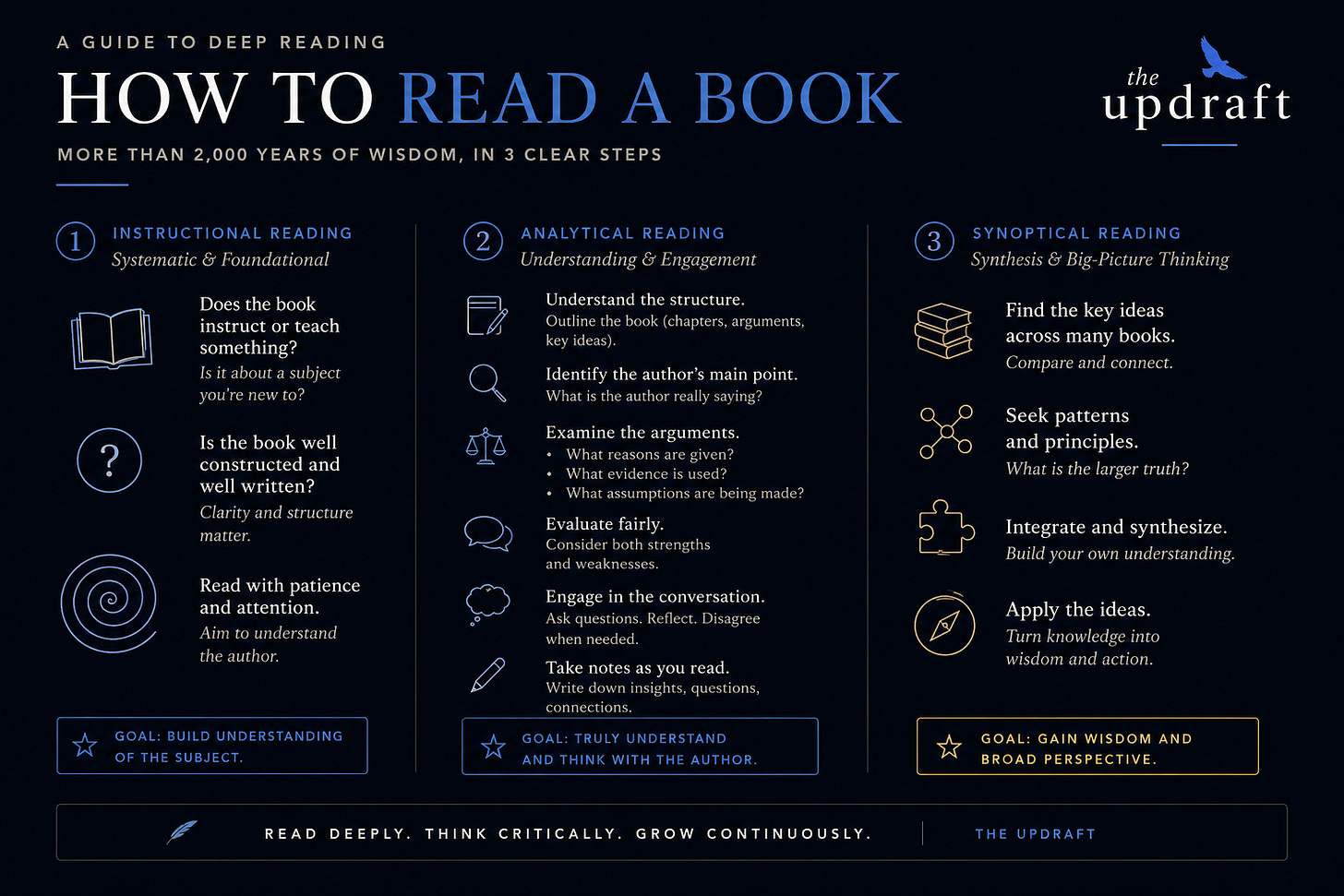
“Marking up a book is not an act of mutilation but of love.” - Mortimer Adler
(I really like my copy of Never Scratch a Tiger with a Short Stick.)
We need more management and leadership books that are worth engaging in and keeping around past the first read. We need a culture where slow, critical thinking, about leadership and EQ is the norm.
Fast answers and self-aggrandizing books aren’t doing enough.
No data.
I got gifted a set of books from a leadership consultant years ago. His business model included teaching the jargon and slang he’d come up with and written into his books.
Respectfully, I read every word and believe they were all awful.
No citations. No studies. No basis of logic and reasoning. Just a book full of idealized bullshit. His photo is on the cover of all three books, by the way. Reminds me of Gilderoy Lockhart from Harry Potter.
The fictional defense against the dark arts teacher who stole people’s stories of heroism and intellect, turned each into a sensationalized best seller, then wiped their memories.
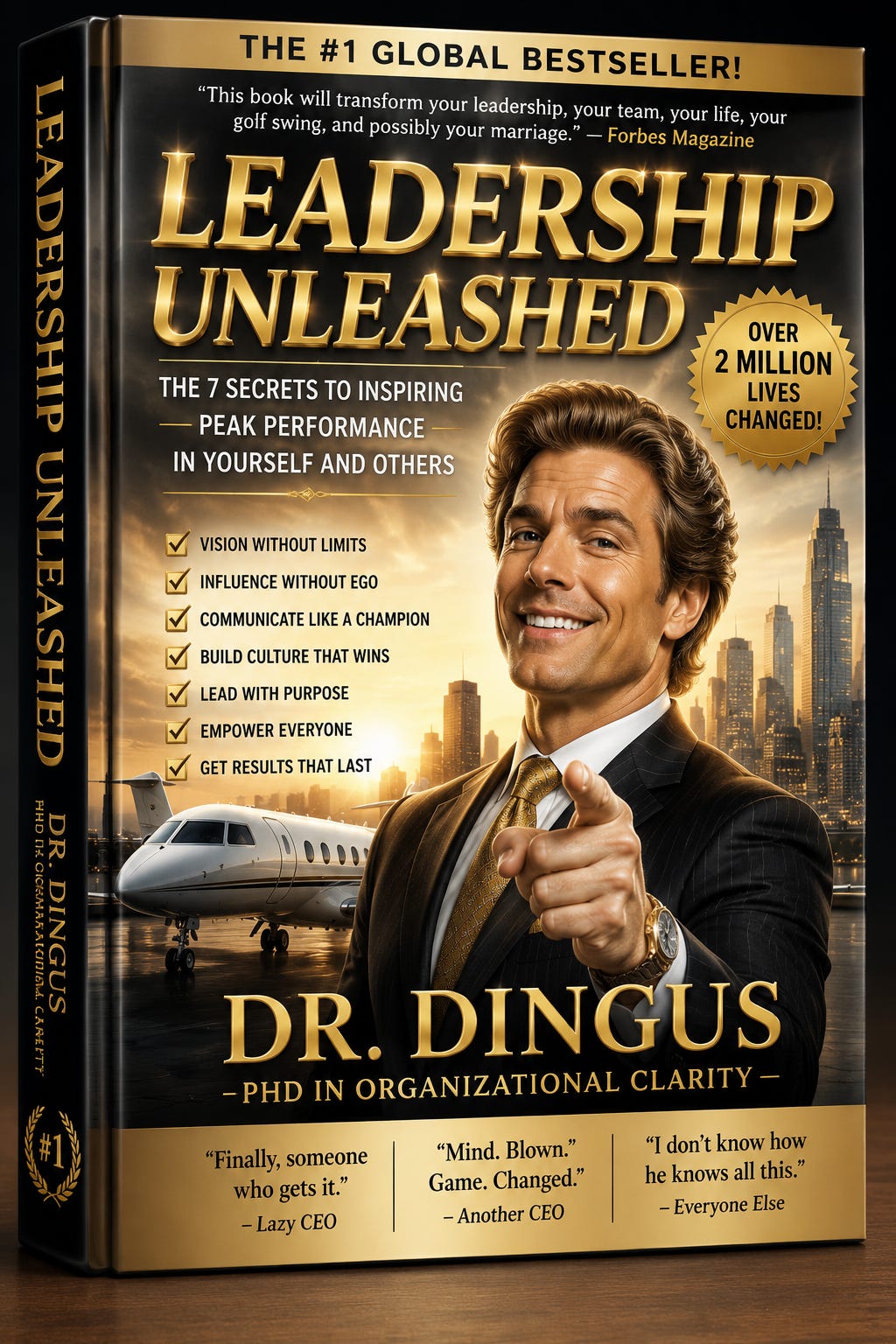
Part of the issue with leadership as a study is that if we want people to see it as a hard skill, we need to treat it like one.
The same goes for emotional intelligence.
There’s data out there on how to be a successful leader and effectively train emotional intelligence. Use it.
High-quality research and primary source references turn personal stories into valuable resources for the studious audience. A leadership book chock-full of data-less personal narrative is going to get read once. Maybe only a skim. And it will not end up on my shelf with dog ears, sticky notes, and coffee stains (a love-mark and the highest compliment I can muster).
“Just be yourself!” Clarity! Alignment!
If you don’t know what’s wrong with toxic authenticity… boy have you found the right substack page. Welcome, my new best friend. 🙂
Here’s a little subscribe button. Just for you. Go ahead. Let me change your life. I’m not like other authors, I’m a cool author. (Mean Girls reference)
Let me catch you up to speed.
Telling people to ‘just be yourself’ abdicates them from the real and hard work of self regulation, growing past self-serving individual preference, and learning modern leadership practices. “Just embrace yourself” can only be done by those in a place of privilege. Atypical leaders aren’t able to be themselves at work because the corporate hierarchy wasn’t built for them.
It was built for white males.

(Photo credit @midtownuniform, pulled and used May, 2026)
‘Just embrace your inner truth’ encourages us to sit back, comfortable, oblivious, perpetuating the problems we have. It’s a message that we’re fine and it’s everyone else that’s the problem.
We need to be real. Our shit is so seriously fucked.
And we could all do better.
This is well captured by Viktor Frankl’s theory of existential humanism. Frankl reminds us that humans need meaning, suffering, human connection, and responsibility (Frankl, 2006).
Authentic leadership, when grounded in Frankl’s ideas of personal responsibility, self-awareness, and self-regulation, offers a compelling answer to institutional mistrust and ideological division. It asks leaders to take ownership of themselves before demanding trust from others.
“Between stimulus and response there is a space. In that space is our power to choose our response.” - Vistor Fankl

But authenticity without accountability quickly collapses into narcissism.
When poorly understood, “be yourself” leadership becomes permission to embrace not only strengths, but also toxic traits and destructive behavior. At its worst, it excuses incompetence, misogyny, racism, abuse, and delusional self-acceptance under the banner of “authenticity.”
Here’s some further reading for you on authentic leadership:
Okay… Jargon.
Anyone who uses the word Clarity, Alignment, or Authentic gets a raised eyebrow from me. I look at their profile and ask myself…
-
“Is this advice coming from someone who’s actually had to fire someone?”
-
“Is this someone who’s actually succeeded in long term culture change within an organization?“
-
“Is this someone who knows how to manage up?”
If the answer is yes, you pass. I read on.
If it looks like you’re “execution light”… I’m disregarding your material.
I’m not here to yuck anyone’s yum - I’m here to be honest and transparent.
That’s not for me. That’s not The Updraft. That’s not Kestryl Edge.
Being critical of jargon isn’t a fringe opinion it’s a widespread truth. We need to remind ourselves of this lens as we wade through the heaps of unhelpful word-salad that’s out there right now.
-
People who use dense abstractions often lack real-world accountability and are provably distanced from reality (Taleb, 2018).
-
Jargon establishes in-groups and the obscurity reinforces hierarchy and the authority they support (Bourdieu, 1991).
-
Unclear language hides unclear thoughts. It masquerades as informed and it conceals incompetence. Jargon is pretentious (Orwell, 1946).
-
Richard Fynman himself repeatedly mocked people who leaned on jargon. He argues memorizing terminology is not a substitute for understanding concepts. Flashy vocabulary does not equal comprehension (Feynman, 1985).
I deal in facts. In experience. In the messy hard moments inevitable to us as humans working alongside humans.

-
We’re here to heal. Not to sensationalize and distract.
-
We’re here to inform totally. Not oversimplify for convenience.
-
We’re here to grow. And growth requires honesty.
So… What next?
Research forward material and insights.
As a writer, I strive to engage in the Leadership, Empathy, and EQ literature.
There’s a boom in publishing these past few decades and there are lots of studies out there worth reading. I learned how to read literature when I was in grad school studying chemistry. I didn’t know this skill would pay off years later as I apply the research skills I learned to other domains. I highly recommend people go find some papers every once in a while and read them. The scientific peer-reviewed literature is quite literally where new knowledge appears.
Many teams have regular safety moments or opportunities to present in meetings.
A great practice is to find a paper that applies to your work and do a ‘literature review’ for your team.
It can be 5 minutes. Include what the paper looked at, how they measured a change, and what their findings are. It’s a healthy and easy way to keep learning and bring new ideas, new facts, to your teams.
I critically think. So will you.
As a writer, I will never use AI to do my long form post writing for me. If you see my name there, on a post, it’s a digested thought that came from me, typed out and edited by me, researched by me.
AI is for making it easier to spend time on the writing that matters. I use AI for easy photos and schemas, getting 100 of notes posted for me every month (fyi - I edit and approve every single one) and automating the BS in-between.
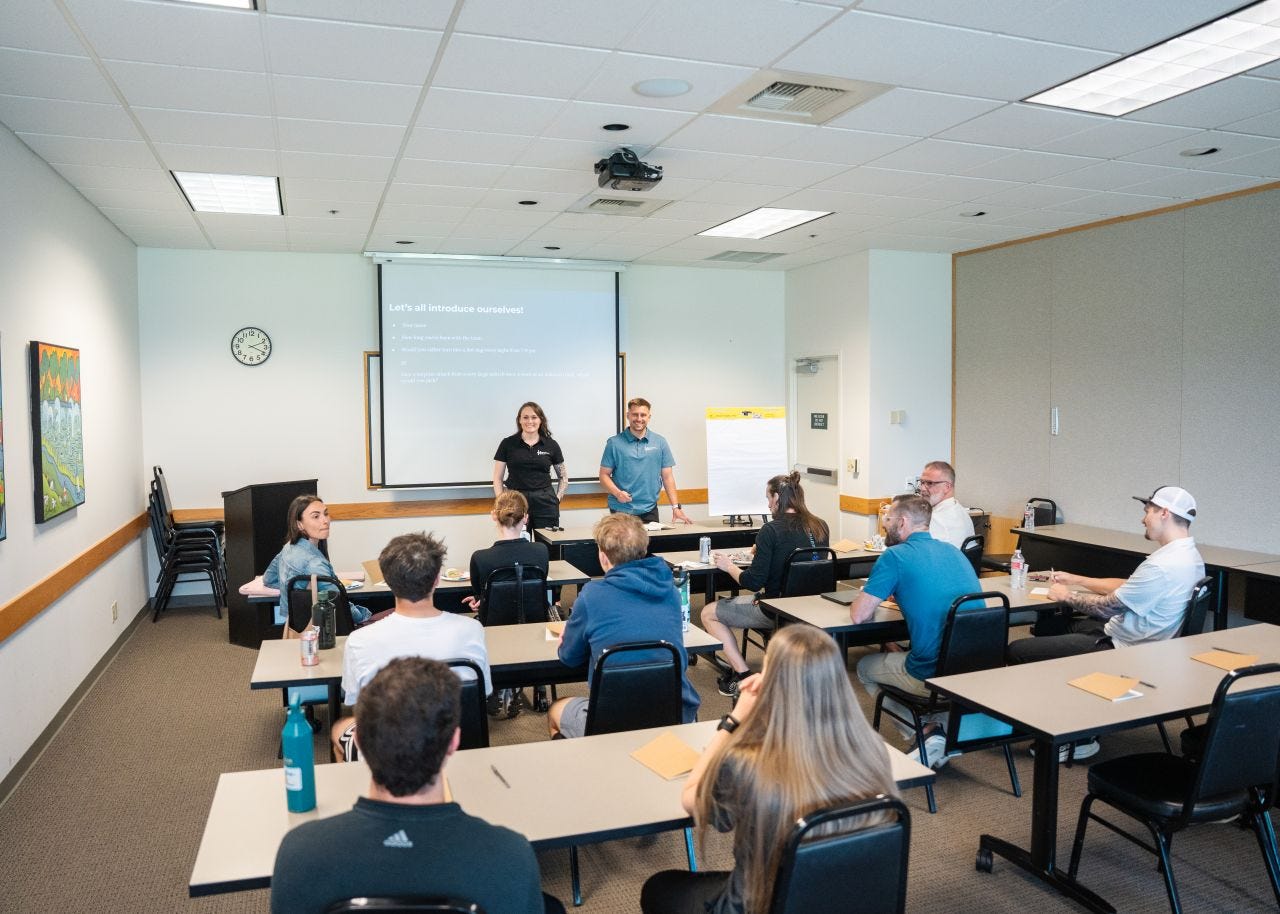
I’m asking our clients and leaders at-large to critically think about their actions and emotions. I can’t in good conscious not critically think myself for the permanent library of The Updraft.
These are my resources for you all. My referenceable tools. My well worn chapters I want you to have at your disposal in times of crisis.
Tools, Tips, and Treasures
My goal is to have a library of posts you can go to if you are in a time of need. And an inbox you can message any time for thoughts, advice, a sounding board. Yes, chatgpt will respond sooner. But my response won’t be canned horse shit trained off of Dr. Dingus’ sensationalized leadership letters. And I won’t lie to you just to make you feel good. We’re in this together. Advisors need to coach towards growth and self sufficiency.
I have several posts already that are meant to be there for references in the future. Here are two of them.
Something better
As a co-founder, I’ve taken my own critiques to heart.
Kestryl Edge provides world-class workshops on leadership, empathy, and EQ. We baked in retention programs to provide leaders with the data needed to retain top talent long enough to achieve culture change.
Our team is diligent about building claims from source of truth.

We research ideas before we present them as fact. We find where the knowledge gaps are in the literature and instead of filling them with our own ideas, we embrace the nuanced potholes in the field. We present all angles and let our audience apply the knowledge in their own way.
I’m proud that instead of offering narrative and platitudes, we bring universal tools and activities that give people actionable skills and practice implementing them.
We dive deep.
We meet you where you’re at and ask you one question…
“ are you ready to grow with us?”
Let’s cut through the noise. The most important step is always the next one.
-Dan
Send this to someone who would enjoy it.
References
-
AI photos generated by ChatGPT from my notes.
-
Workshop photos taken by Joey Winkler.
-
The mid town uniform photo from @midtownuniform, 2026)
Adler, Mortimer J., and Charles Van Doren. How to Read a Book: The Classic Guide to Intelligent Reading. Rev. and updated ed. New York: Simon & Schuster, 1972.
Bourdieu, Pierre. Language and Symbolic Power. Cambridge, MA: Harvard University Press, 1991.
Feynman, Richard P. Surely You’re Joking, Mr. Feynman!. New York: W. W. Norton, 1985.
Frankl, Viktor E. Man’s Search for Meaning. Boston: Beacon Press, 2006.
Frankl, Viktor E. The Doctor and the Soul: From Psychotherapy to Logotherapy. New York: Vintage Books, 1986.
Goleman, Daniel. “What Makes a Leader?” Harvard Business Review 76, no. 6 (1998): 93–102.
HR Grapevine. “C-Suite Compensation Shifts as Dual Roles Become Commonplace.” HR Grapevine, March 14, 2025. https://www.hrgrapevine.com/us/content/article/2025-03-14-c-suite-compensation-shifts-as-dual-roles-become-commonplace
Harvard Law School Forum on Corporate Governance. “How to Fix the C-Suite Diversity Problem.” Harvard Law School Forum on Corporate Governance, February 25, 2023. https://corpgov.law.harvard.edu/2023/02/25/how-to-fix-the-c-suite-diversity-problem/
Orwell, George. “Politics and the English Language.” Horizon 13, no. 76 (1946): 252–65.
Pew Research Center. “Women Are a Rising Share of U.S. Managers and Professionals.” Pew Research Center, July 17, 2025. https://www.pewresearch.org/short-reads/2025/07/17/women-are-a-rising-share-of-us-managers-and-professionals/
Riggio, Ronald E., and Rebecca J. Reichard. “The Emotional and Social Intelligences of Effective Leadership: An Emotional and Social Skill Approach.” Journal of Managerial Psychology 23, no. 2 (2008): 169–85.
Taleb, Nassim Nicholas. Skin in the Game: Hidden Asymmetries in Daily Life. New York: Random House, 2018.
U.S. Bureau of Labor Statistics. “Management Occupations.” Occupational Outlook Handbook. U.S. Department of Labor. Accessed May 19, 2026. https://www.bls.gov/ooh/management/home.htm

(additional photo added 6/11/26 as I figure out my own branding.)
(updated 6/12/26 to address minor typos.)
(minor grammar fix 6/16/26.)
Dan is co-founder of Kestryl Edge, a leadership development consultancy helping operations-heavy companies reduce turnover and rework through emotional intelligence. Work with us →
Enjoyed this? Subscribe to The Updraft on Substack for more.
Originally published at dankorus.substack.com. The Updraft is the canonical home for this piece.