
The Space Between Bars - Change Management
Change rarely fails because the idea was wrong.


Team, picture a trapeze artist.
The terrifying part isn’t hanging one-handed from the first bar, or the moment they secure a hold on the next one.
It’s the suspension in mid-air between the two: what was and what will be.
It takes courage to release your grip on the known, with no guarantee of securing a hold on the other side.

In a meeting between Serena and I, we agreed that when it comes to making changes, most organizations design the next bar and pretend the air doesn’t exist.
So it’s not surprising those experiencing change are so reluctant to let go, for fear of plummeting to the ground.
Serena Spink is a former lawyer, corporate leader, and now digital nomad who left a UK FTSE 100 to help professionals develop the leadership skills that are never taught in the workplace, from wherever in the world has good wifi this month.
I’m Dan, founder of Kestryl Edge, a not-your-typical training company that teaches emotional intelligence and leadership skills. ( I always think of Mean Girls, “I’m not a regular mom, I’m a cool mom.”)
Serena and I met, we traded thoughts on change management, and now you get this.
Here’s the deal. We’re each responding to the same three prompts:
A change that made you want to change jobs.
An energizing change.
What we learned, and what you need to know.
Same questions, two very different careers, zero coordination on the answers. You get to spot the pattern yourself.
Enjoy.
A change that made you want to change jobs. (Dan)
I’ve had buckets of change initiatives that failed. I handed off a piece of paper or an idea and just said GO.
I provided the end state, some background knowledge, maybe a ‘why’ as to what we were up to, and then set people loose into the unknown to chart a course and find the grail I told them exists. I failed when I described and didn’t support. I failed when I didn’t collect input and get buy in. And I failed when I treated changes as some instantaneous thing that happens because I gave a speech about it.
I saw this happen in the startup world. We were all given books on Entrepreneurial Operating System (EOS) and were told that this was the new standard for performance, promotion, and organization within the company. EOS is a great template for systems-light teams needing a baseline to grow from. For us, it was a tool to manage and change the workers, but not a tool reciprocally applied to the management.
They didn’t wonder “Am I the right person in the right seat?” “Am I giving my team what they need to complete their goals?” They picked what they wanted from it, what was convenient for them and afforded control and boundaries, and seemed to scrap the rest about leading with EOS. The tools and some jargon stuck around but the culture remained the same. Status Quo unchallenged.
I’ve also seen people come in and announce sweeping changes to work scheduling. Right out of the gates their system received broad criticism, no support from the floor or the leaders who would have to back the change.
The idea was spot on. But the logistics sucked and needed to change.
It’s automation hinged on one person who had written fragile code and when she burned out and left for greener pastures the system fell apart and they had to run it manually.
When people gave feedback and input they shut them down and dis-invited them from meetings.
And the big boss? He didn’t know what was going on or the implications but had made up his mind this change was needed and made his position clear…
get in line or get going to a new job.
We know what happened next. The change was implemented. Everyone hated it. We hemorrhaged people.
And years later the team that’s left is still trying to undo the damage. The original architects long since moved on and are giving presentations about all the successes they’ve had.
All the good they did. It’s one thing to try a change and fail, start again, that’s human. It’s another to make a change, then leave, letting those behind you pick up the pieces.
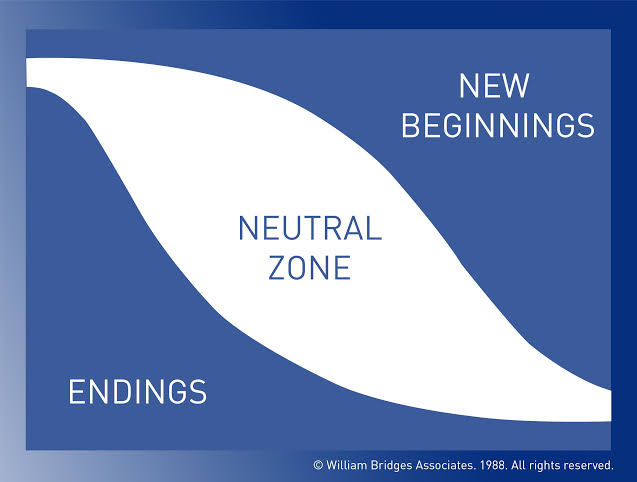
Bridges’ Transition Model argues that while external organizational change happens instantly, the internal psychological transition for employees is a gradual, emotional process.
It requires leaders to first help people let go of the past, actively guide them through a confusing "neutral zone," and finally support them in embracing the new beginning.
A change that made you want to change jobs. (Serena)
In my last company, the organisation decided to introduce a group-wide “talent review” process.
The intention was good. Managers would finally have a structured way to identify their best people, plan for succession, and have the kinds of development conversations that too often got avoided or handled inconsistently. Team members were regularly asking for more help with career development, so it would address a bottom-up request.
What followed was a lesson in how good intentions and poor implementation are not mutually exclusive.
The tools were designed with the managers in mind: guidance documents, frameworks and automated systems. But the people-centred change journey was not.
With very little runway, managers were handed the tools and expected to use them.
Nobody had been clear enough about what they were actually trying to achieve. Nobody had checked whether managers understood the purpose well enough to explain it confidently to their teams - or whether they even believed in it. And nobody had asked whether the tools created would fit into the managers way of working.
The result was predictable. Some managers ran with it. Some ran in the wrong direction. Some didn’t move at all.
The confusion spread downward through the organisation and what had been designed to help people and their career development started to feel, on the ground, like another tick-box exercise that people ‘just had to get on with’.
Something being done to them rather than for them.
After launch, we had to spend significant time and energy trying to course-correct, addressing concerns, clarifying misconceptions, rebuilding trust, while simultaneously needing people to deliver the reviews.
The change wasn’t wrong. The sequencing was.
By skipping the step of bringing people along before asking them to lead others through something new, we didn’t just slow the change down.
We made it harder and less effective for the very people it was designed to help.
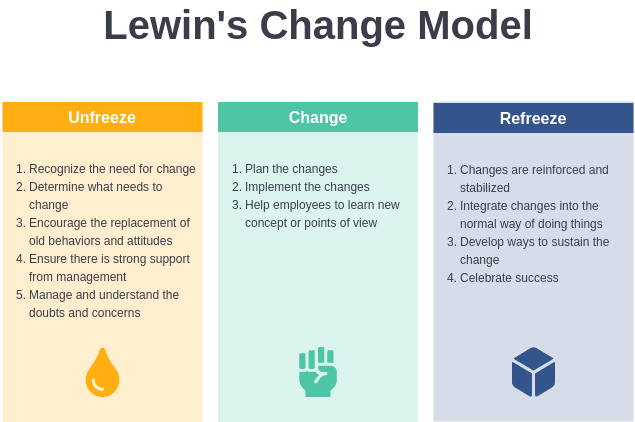
Lewin’s 3-stage model simplifies organizational change by comparing it to reshaping a block of ice through three phases: Unfreezing, Changing, and Refreezing.
It requires breaking down the status quo to prepare for new behaviors, implementing the actual transition, and then solidifying those new norms into the company culture to prevent regression.
You know the person in the friend group who has great ideas but the follow-through is a little… well… not there?
Send this article to them. Help their great ideas make it out of the group chat through the power of change management done well.
An energizing change. (Dan)
The best change management I’ve led has all been slow, steady efforts over time to build high performance teams.
No overnight changes. No big speeches or announcements. The change started as observations that a group of people had potential to do better, to be something better.
Nothing happened quickly it was all slow changes over time. Pruning. Planting. Coaching. Pulling strings. Shifting the schedules, roles, and responsibilities just enough that it stuck but not enough that the ripples harmed anyone or distracted from the goals at hand.
Looking at who had untapped potential and giving them the help they needed to become something better the next day.
It’s exhausting.
The easiest thing to do when you have a team that isn’t performing is to turn a blind eye because changing them is harder than getting someone else, your choice performers, to step in. This cheats people of growth though. And good leaders are gardeners of people. I showed up every day. Consistent with my expectations and generous with my support, patient with my explanations, and looking for the best in people. Looking for the delta between where they are and what they could do closing those gaps with a little push in the right direction.
Both times I ensured my desk was as close to the work being done as possible.
Even it means working on the floor itself.
When you’re building trust and saying your priority is the people. You must mean it. Comfy distant offices and calendars full of meetings are moats of comfort for leaders who don’t want to get messy with the reality of coaching people.
My best changes we’re ones where I was slow and steady on the trapeze and I didn’t fear the flight because I trusted my team to grow and I trusted myself to keep showing up.
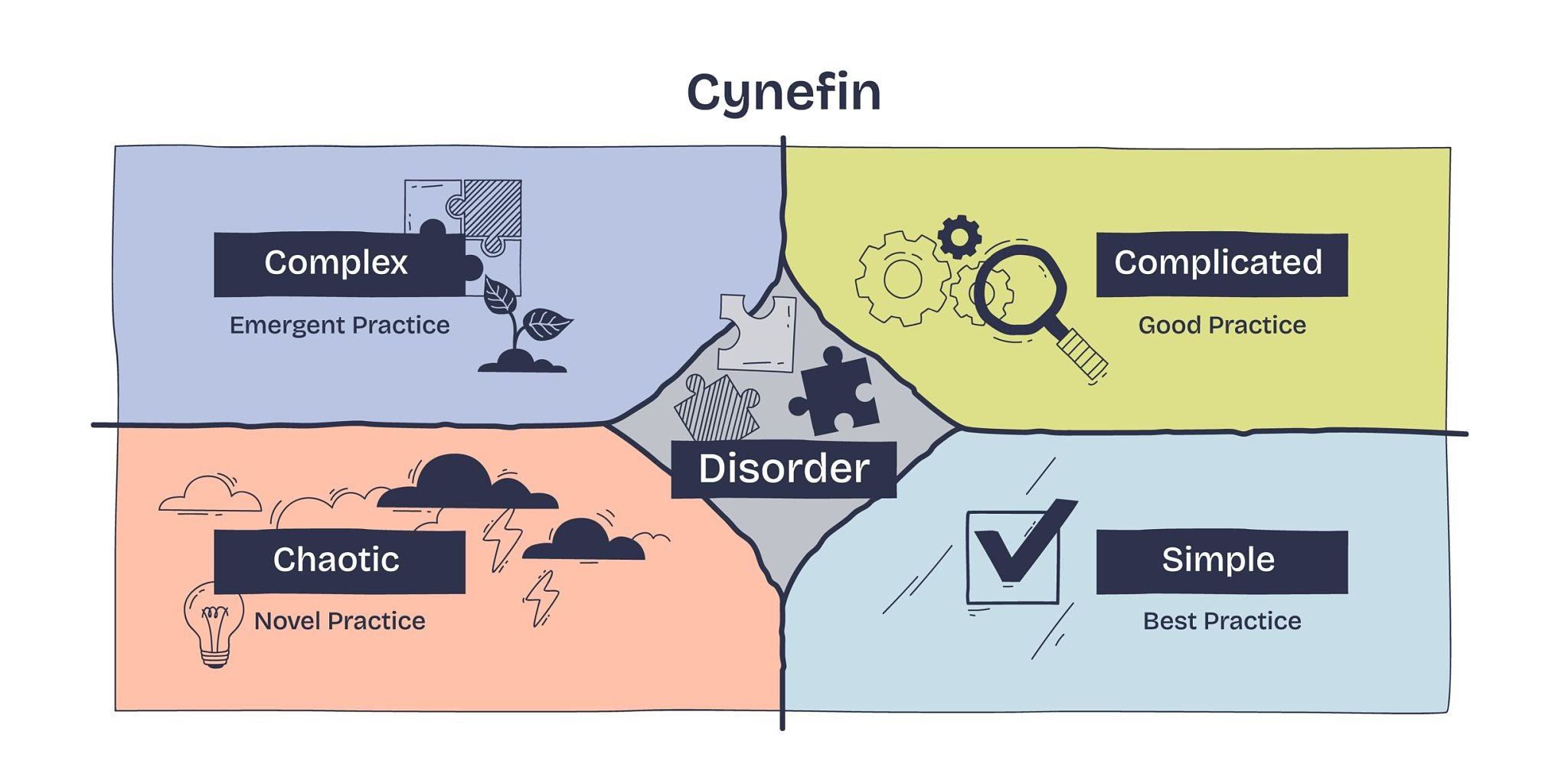
Rather than offering a rigid step-by-step roadmap, the Cynefin Framework helps leaders categorize situations into four domains based on their level of predictability.
Its core contrarian insight is that human organizations are inherently complex, requiring leaders to abandon top-down planning in favor of small, safe-to-fail experiments to discover what actually works.
An energizing change. (Serena)
When I was running the operations for the legal and compliance function at a big UK energy company, we wanted to improve the quality of work across the 200-person department through better behaviours.
We wanted to see more collaboration. More growth mindset. More willingness to think differently and try things that hadn’t been tried before. To really make the improvements stick, we decided it would affect bonuses.
The usual path would have been to cascade it from the top: six of us on the senior leadership team agree the message, announce it to the department, and expect people to fall in line.
We didn’t do that.
Before we said anything to anyone, we sat in a room together and asked ourselves a different set of questions. Not “what do we want people to do?” but “how are people going to feel when we tell them this?”.
We anticipated the pushback. We stress-tested the rationale. We got ourselves genuinely aligned, not just on the what, but on the why, and on the honest answers to the uncomfortable questions we knew were coming.
Then we took those early ideas to the rest of the department managers before anything was finalised. We asked them what they were worried about. What questions they expected from their teams. What felt unclear or unfair. And then we asked for their help in shaping the message.
That last part mattered most.
When you ask someone to help build the thing rather than just implement it, the conversation changes. They stop being a relay station and start being a co-author. They walk into conversations with their teams not just informed, but genuinely bought in.
The change landed. Not without friction, but with far less than it might have had. The middle layer understood the rationale, felt heard in the process, and were equipped to support their teams through it.
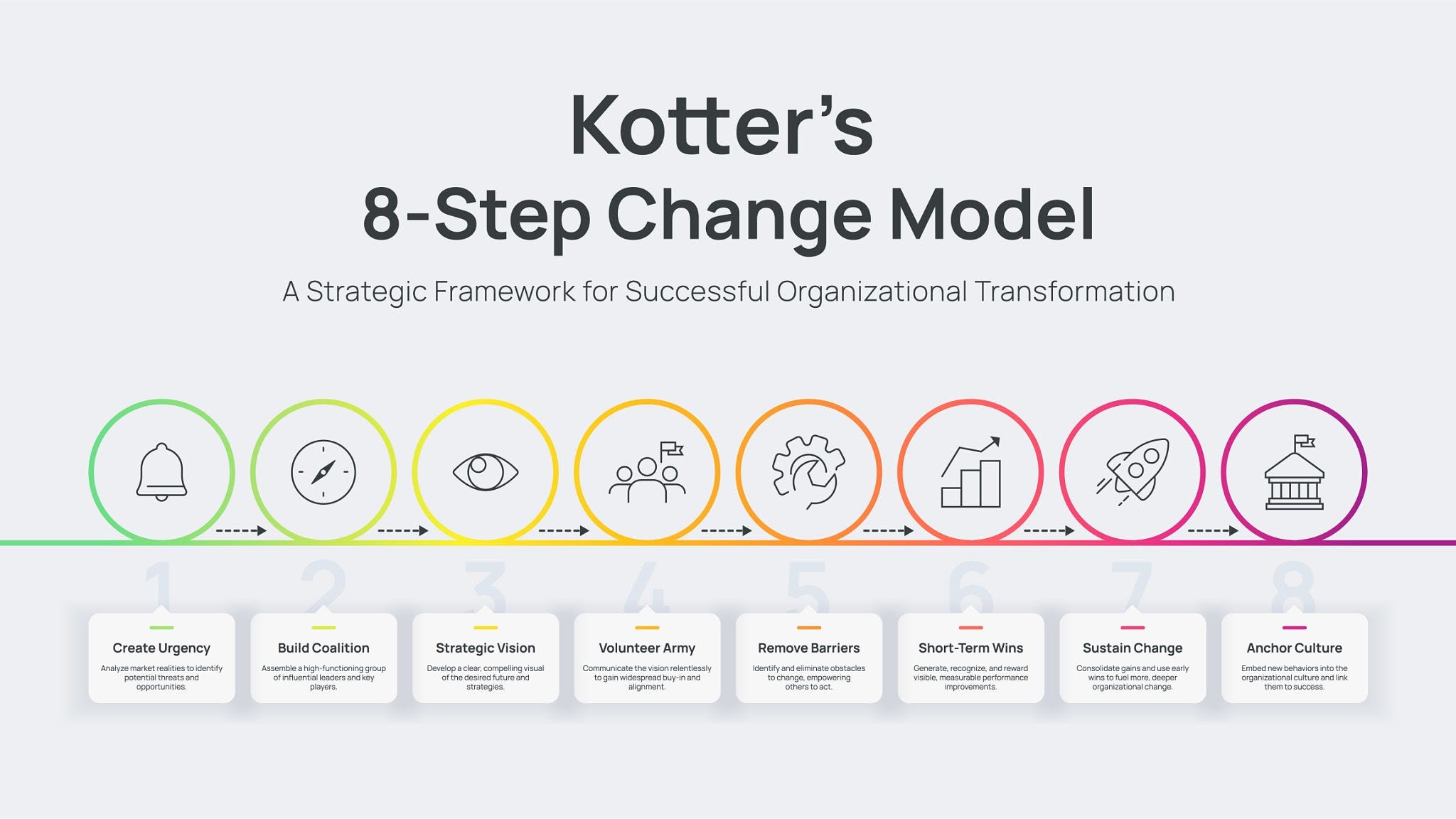
Kotter’s framework is a sequential, leadership-driven roadmap designed to build and maintain massive momentum.
It starts by establishing a fierce sense of urgency and finishes by permanently anchoring new behaviors into the corporate culture.
Change doesn’t start from nothing. A catalyst is needed. A spark of inspiration. A good idea sent to someone in your circle. Hmmm. If only there was a button you could press to start a change in someone else’s life…
What we learned, and what you need to know. (Dan)
Leaders need to understand that change isn’t a tsunami that washes away the bad and cleanses the land leaving a fresh picture underneath while management watches on from high ground.
The wave destroys the houses, the trees, the organizational infrastructure. It’s a river that washes and shapes all stones indiscriminately. It carves out the land slowly enough that plants and trees can still take root and be nourished by the change. Not blown over in aggression.
The best changes aren’t sudden, and they don’t happen “because I said so”.
They are intentional, patient, supportive, and reinforcing of humans choosing something better.
Some changes sometimes need to happen fast? Hell yes.
And we can enact change quickly and still not impart fear or resistance. This is where getting buy-in from your leaders becomes important. Herd animals often have a leader and when that one moves, the rest do too. Border Collies herd by finding that one special animal in the flock. Guiding ‘the special one’ to the goal zone will bring everyone else along with it.
Find your cultural leaders, find the person people look to. When they buy in and show a different way, others will follow.
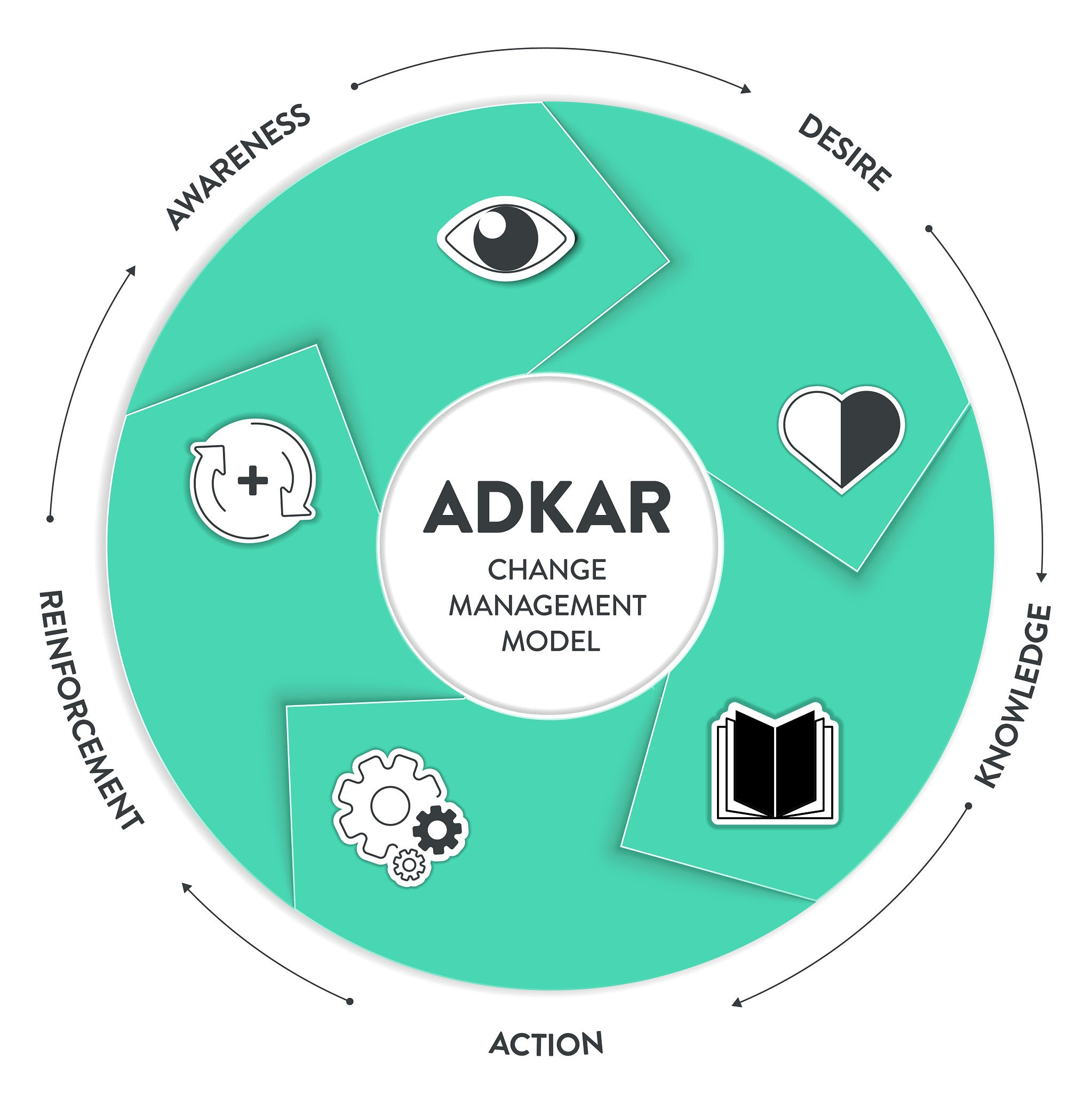
The ADKAR model says organizations don't change; people change, one person at a time.
If an individual isn't moving through the transition, the organizational change will ultimately fail.
What I learned, and what you need to know. (Serena)
In my experience, the variable that separates the changes that stick from the ones that quietly collapse is deceptively simple:
Did the people who needed to carry it feel like they were part of it?
Not consulted. Not informed. Part of it.
That requires the people leading change to really understand the people they are asking to change: what motivates them, what worries them and what will make them feel understood.
It means:
Anticipating what could go wrong and how people will feel best supported
Finding your influential people early, the people others look to and will follow, and investing in them before you make anything official
Leaving time to take on board feedback and adapt in response to it
Being clear and honest about why change is needed, why now and what the benefit is
Communicating the same message in more ways, for longer than feels necessary, BEFORE anything takes effect
Change rarely fails because the idea was wrong. It fails because the people who needed to carry it were the last to be consulted.
Change works best when it doesn’t feel like something that’s done to you.
Returning to the trapeze analogy, when done well, it makes you want to release your grip and feel safe and supported in your mid-air transition to something better.
The authors
Serena
Ex-corporate leader + lawyer. I left the corporate world to build a different kind of life. Now I help business owners and professionals become confident people leaders. To read more about everyday modern leadership and what it takes to design a career and life that feel like your own.
Dan
Do you want to be a better leader and improve the workplace?
Welcome to The Updraft, the wind in your sails for actionable, research-based, punk rock leadership.
The Updraft - weekly leadership articles.
 | A guest post by
|