
Crosswinds - MindFullOfIt (Kel) from Storm Psychology
Learn from Kel.


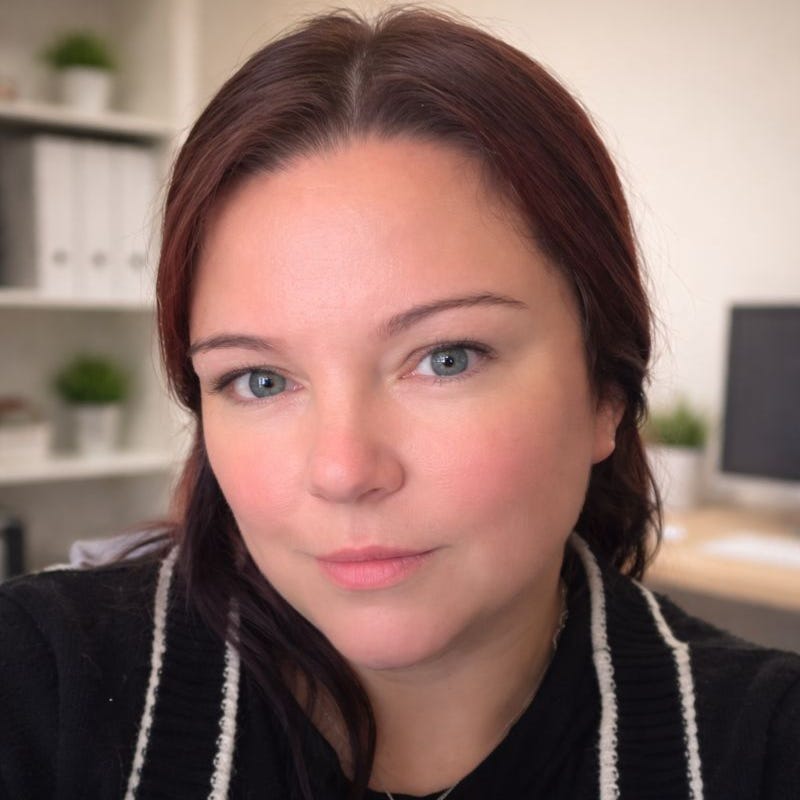
Kel, as she introduces herself writes about what we do when the heat is turned up. What comes up and how we proceed when we’re in the eye of the storm.
These moments are often short lived, fleeting, and also some of the most consequential of our lives.
Kel works for the NHS in the UK. An internationally renowned facility for the standard of care it provides its patients. Her stories show us the life of someone who has had to work damn hard to be where she is.
This is someone who grew up working 17 hour days to pay the bills.
This is someone who put herself through school to be more helpful to others while working full time for the NHS.
Kel is a f*cking hero.
We have lots to learn from her.

Who am I today?
That’s a dangerous question. It depends what day you catch me on!
Today, I’m a tired, overworked, underpaid woman who’s somehow still convinced she can squeeze thirty hours into a twenty-four-hour day. Every morning I make a to-do list that would challenge three adults, and every evening I act surprised I didn’t finish it.
I work in the NHS, I write about psychology and mental health, and I spend a lot of my time trying to make people feel heard.
That’s the one thing that’s stayed with me throughout my career.
Whether someone is a patient, a colleague, a friend or a reader, I want them to leave feeling like someone genuinely listened.
At the end of the day, if I helped one person feel a little less alone or understand themselves a little better, that’s a pretty good day.
Tell us your story of how you got here.
A memory that’s stayed with me is being late for school because there was an ambulance outside my neighbors house.
I wanted to know if she was okay.
My teacher was far more interested in why I was late than why I’d stopped.
I remember thinking, “But what if she’s not okay?” Looking back now, I think that was one of the first times I realized I naturally noticed the person before the process.
I became a mum at sixteen. I spent years working long hours in cleaning, retail and care, often juggling multiple jobs just to keep everything going. My dad died just three months after being diagnosed with cancer. My mum became seriously ill, and there were times when I was working seventeen-hour days simply because the bills still had to be paid. Along the way, I had my own struggles with depression, trauma and illness too.
Nobody was coming to rescue us, so I learned to keep putting one foot in front of the other.
Every job taught me something, and one lesson kept repeating itself.
I was never interested in asking, “Why didn’t someone turn up to work?”
I wanted to know, “Are they okay?”
I found myself drawn to the person behind the situation.
I realized psychology wasn’t just something I found interesting. It gave me the language for questions I’d been asking my whole life.
I joined the NHS, completed my psychology degree while working full-time.
About eighteen months ago I started writing online. If I’m honest, I originally hoped it might earn a little extra money because things were tight. Instead, I found something far more valuable: a community.
People started telling me they finally felt understood.
That changed everything.
Looking back, I don’t think my story has ever really been about the jobs I’ve had. It’s about trying to make sure people feel seen and heard because I’ve experienced what it’s like when you don’t.
I don’t believe we can save everyone. But I do believe we can throw someone a rope, remind them they’re not alone, and help them find their own way out.
What did you do in order to grow?
More than anything else, I learned to listen.
Not just to the words people were saying, but to what they weren’t saying. To the pauses, the body language, the things people found difficult to talk about, and the stories sitting underneath the behavior.
I remember supporting a young man with epilepsy who had a seizure at the care home. Everyone understandably panicked, but I remember thinking, “Right, what does he need?” We timed the seizure, followed his emergency plan and stayed calm. What I remember most though wasn’t that day. It was months later, when we’d built enough trust that we’d sit coloring together, read Marvel books and laugh together, in previous three years I had never heard him laugh. I remember thinking afterwards that we’d spent three years managing his epilepsy, but we’d only really started getting to know him as a person once we’d slowed down enough to listen.
Looking back, I don’t think growth was one big turning point. It was thousands of small moments where I chose to stay curious, to keep listening and to let other people’s stories change the way I see the world.

How did you learn emotional intelligence?
I don’t think emotional intelligence is something you can learn from a book.
Psychology gave me the language for it, but life taught me what it actually looked like. I learned it by listening. Really listening.
My own life has shaped that too. I’ve experienced grief, depression, trauma, financial struggles and times when I felt completely unseen. Those experiences never made me an expert in other people’s lives, but they did make me slower to judge and quicker to ask, “I wonder what’s happened here?”
If you could change one thing about the workplace, what would it be?
I’d make it about people again.
I know every organisation has targets, budgets and pressures, and those things matter. But somewhere along the way, I think many workplaces have forgotten that it’s people who achieve those targets in the first place.
I’d also challenge the way we think about hierarchy.
On paper, organisations often look like a pyramid, with senior leaders at the top and everyone else underneath. I’ve never really seen it that way.
Every role matters.
Take the cleaners out of a hospital and operations can’t happen safely. Take them out of a school and you’ll soon see the impact. Stop collecting the bins and before long you’ve got rubbish piling up, pests arriving and public health becoming a real issue.
Yet we still hear people say, “They’re just a cleaner,” or, “They’re just a bin collector.”
I’d love to remove the word just from the workplace altogether.
Because nobody is “just” anything.
Every single role contributes to keeping an organisation running, whether you’re the chief executive, the receptionist, the porter, the cleaner or the person making the tea.
For me, leadership isn’t about standing at the top of a pyramid. It’s about recognising that you’re part of the same team and making sure the people around you feel valued.
I remember asking one of my managers how he was doing, and he became quite emotional because nobody had asked him for such a long time. That really stayed with me. Managers need support too.
I’ve also worked in places where the culture was very different. I once booked annual leave for a root canal. The following day I was genuinely unwell after the treatment and phoned in sick. Instead of asking if I was okay, I was told to take a couple of paracetamol and be back at work the next day.
That experience taught me exactly how I didn’t want people to feel.
If I could change one thing, it would be this: I’d want every person, regardless of their job title, to feel respected, valued and heard. Because when people feel they matter, they don’t just work better. They look after each other better too.

What is leadership to you?
For me, leadership has never been about authority.
It’s about responsibility.
Yes, part of being a leader is making sure standards are met and that people are doing their jobs properly. Difficult conversations are part of that. But I don’t think people should leave those conversations feeling humiliated or afraid.
If someone has made a mistake, I’d much rather take them to one side and have an honest conversation.
You get far more from people when they feel respected than when they feel frightened. I remember one member of staff coming to me after a difficult conversation and saying, “Thank you for speaking to me like a person.” That stayed with me because it reminded me that you can challenge someone without making them feel small.
I’ve never believed fear creates great teams.
Trust does.
One thing I’ve often been told throughout my career is that I’m too friendly with the people I work with. I never really saw that as a weakness. I think you can care about people, build genuine relationships and still have professional boundaries.
If I have to challenge someone, then I’ll challenge them. That’s part of my role. I’ll always be honest about that.
But once that conversation is over, it’s over.
I don’t believe someone should feel labelled by one mistake or one difficult meeting. They’re still the same person they were before they walked into the room.
For me, leadership is about creating an environment where people feel safe enough to ask questions, admit mistakes and keep learning, because that’s where real growth happens.
At the end of the day, titles don’t make people leaders.
The way you treat people does.
And if I had to sum leadership up in one word, it would simply be this:
Care.

Did you change after becoming a leader? If so, how?
I’m not sure I changed because I became a leader.
If anything, I think those situations helped me realise what kind of person I already was.
One thing I’ve noticed about myself is that when other people panic, I tend to become calmer. I don’t know why, but my brain seems to switch into, “Right, what needs to happen next?”
I remember one occasion during COVID when an agency member of staff tested positive after arriving at the care home.
There was a lot of uncertainty and understandably some panic.
Rather than worrying about who was in charge, I picked up the policy and started working through it. We sent the member of staff home, organised testing for everyone, made sure infection control procedures were followed, arranged the cleaning, sorted the clinical waste and worked through everything that needed to happen before contacting senior management.
At the time, I wasn’t the team leader.
I was simply trying to make sure everyone stayed safe.
Looking back, I think that’s what changed.
I stopped believing leadership was about having a title and started seeing it as taking responsibility when responsibility is needed.
Whether you’re officially in charge or not almost becomes irrelevant. If people need someone to stay calm, solve problems and support the team, then you step forward.
That’s the kind of leader I’d always want to be.

What’s a funny, ridiculous, embarrassing or wild story from your life?
I always struggle with this question because I’m probably not the person people expect. I don’t have a story about backpacking around the world or waking up somewhere wondering how I got there.
What I do have are hundreds of little stories from everyday life. Moments from working in care or the NHS where something completely unexpected happens and you look at your colleagues afterwards thinking, “Well... nobody warned me today was going to go like that.”
I find joy in ordinary moments, in good conversations, in making someone laugh, and in helping people feel a little less alone.
It might not be the most dramatic answer, but it’s an honest one, and I’d rather give you that than pretend to be someone I’m not.
How does power affect you?
I’ve never been motivated by power, status or job titles. They don’t really mean much to me on their own.
What matters to me is what you do with the responsibility that comes with them.
If someone gives me more responsibility, I’ll do everything I can to support the people around me. I don’t see leadership as moving further away from the team. If anything, I think it should bring you closer to them.
I think power becomes dangerous when people start believing it makes them more valuable than everyone else.
For me, it should do the opposite.
The more influence you have, the greater your responsibility is to listen, support people, stay humble and create an environment where others can thrive.
What do you wish you’d learned earlier?
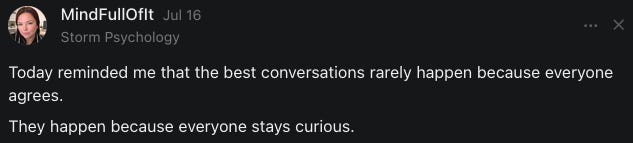
I wish I’d learned that it’s okay to challenge people respectfully.
Earlier in my career, I spent far too much time trying to keep everyone happy, especially people in positions of authority.
I thought being a good employee meant saying yes, keeping the peace and getting on with it.
Looking back, I realize there were times when I should have spoken up.
Not because I wanted conflict, but because sometimes the right thing to do is to ask a difficult question or respectfully say, “I don’t think that’s right.”
I’ve always found it much easier to stand up for other people than I have for myself. If someone else is being treated unfairly, I’ll happily have that conversation. If it’s me, I’m much more likely to convince myself it’s not worth making a fuss.
I’m getting better at that now.
I’ve realized that challenging something respectfully isn’t being difficult. It’s part of caring. Whether you’re advocating for a patient, a colleague or yourself, speaking up can be one of the kindest things you do.
I still don’t find it easy, but I no longer believe that staying quiet is always the right option.
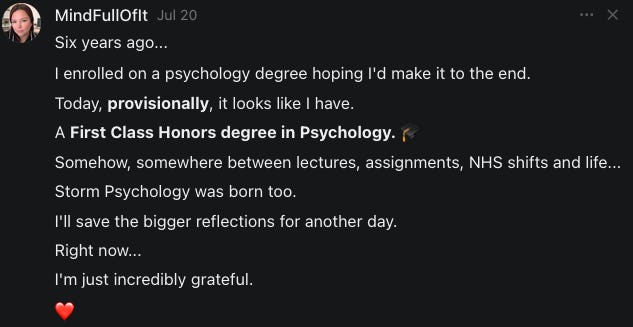
Kel discovered she had ADHD about seven years ago. Realizing this has fundamentally altered her self-perception. She no longer thinks of herself as “dumb” or “deficient” she knows she just learns differently. This was a pivotal moment in her journey and I’m including it here because it’s clear Kel has lots of compassion for others and this seems to be a moment where she develops some compassion for herself. Recently, she graduated First Class Honors with a degree in psychology.

What’s an underrated skill to develop as a leader, and how would you coach someone to learn it?
Without a doubt, it’s listening.
Not listening so you can reply. Not listening because you’ve been told it’s good leadership. Really listening.
If I were coaching someone, I wouldn’t start by teaching them techniques. I’d ask them to become curious.
Slow the conversation down.
Ask one more question.
Pay attention to what isn’t being said as much as what is.
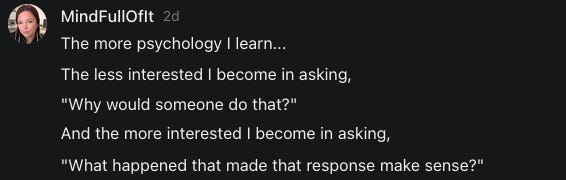
And remember that behavior usually has a reason, even if you don’t know what it is yet.
For me, leadership isn’t about getting the most out of people.
It’s about understanding people well enough that they can get the best out of themselves.
Everything else tends to follow from there.
What’s a hill you’d die on without regrets?
Doing the right thing.
It sounds simple, but it isn’t always easy.
There have been plenty of times in my career where doing the right thing would’ve been easier to avoid. It can mean having an uncomfortable conversation, challenging a decision, speaking up for someone who doesn’t have a voice, or admitting when something isn’t right.
I’d rather have those difficult conversations than stay quiet because it’s more convenient.
The other thing that’s always mattered to me is fairness.
People sometimes dismiss that by saying, “Life isn’t fair,” and of course they’re right. But that doesn’t mean we shouldn’t try to be.
I’ve never liked seeing people treated differently because of a label, a diagnosis, a job title or simply because they’re quieter than everyone else.
Whether I’m working with patients, colleagues or writing for Storm Psychology, I try to see the person first.
Treat people fairly. Listen before you judge. And if something isn’t right, have the courage to say so.
But I hope people would say that I always tried to do the right thing for the right reasons.
Who do you look up to, and why them?
The people I’ve admired most have been the people I’ve supported.
I’ve worked with individuals who have faced challenges that many of us can’t even imagine. People living with serious mental illness, learning disabilities, trauma, anxiety and physical health conditions. I’ve watched people take steps that might seem small to someone else but were absolutely enormous to them.
I’ve seen someone leave the house for the first time in months.
I’ve seen someone build enough confidence to go to college.
I’ve seen people keep trying after years of setbacks.
That kind of courage doesn’t usually make headlines, but I think it’s extraordinary.
They’ve taught me more about resilience, determination and hope than any famous leader or public figure ever could.

What advice would you give someone starting their first day at work?
Go in with an open mind.
Watch. Listen. Learn.
Don’t feel as though you have to know everything on day one. Ask questions, make mistakes, be curious and take the opportunity to learn from the people around you.
I’d also say something I wish someone had told me much earlier.
Your job is something you do. It isn’t who you are.
Work hard while you’re there. Be kind to people. Be reliable. Learn as much as you can.
Life’s too short to spend years somewhere that makes you unhappy.
Find somewhere that values you, challenges you and allows you to grow.

What advice do you have for people in the messy middle team leaders, middle managers and senior contributors?
My biggest piece of advice would be this: don’t lose sight of the people.
Remember what it felt like before you became the manager.
Don’t let a promotion create distance between you and your team.
Be approachable enough that people feel safe telling you when something isn’t right.
And don’t be afraid to challenge upwards as well as support downwards.
The people in the middle have a unique opportunity. You can advocate for your team while helping your organization succeed.
If you can do both with honesty, fairness and compassion, you’ll be remembered long after anyone has forgotten your job title.

What advice do you have for senior leaders, the rainmakers and the people at the top?
Never forget who makes your organization possible.
It’s easy to become focused on strategy, finances, targets and growth. Those things matter, but none of them happen without the people who turn up every single day and make your organization work.
Get out of your office.
Walk around.
Learn people’s names.
Say good morning.
Ask how they are, and genuinely listen to the answer.
One thing I’ve learnt over the years is that people rarely forget how you made them feel. They might not remember the meeting you chaired or the presentation you gave, but they’ll remember whether they felt valued.
And don’t underestimate the power of saying thank you.
Celebrate people when they’ve done something well. A handwritten note, a quick conversation, remembering a birthday, a small Christmas gift or simply recognizing someone’s hard work can mean far more than you realise.
The people at the top aren’t successful because they stand above everyone else.
They’re successful because of the people standing beside them and behind them.

The time I ignored my own health
For about six weeks, my life revolved around everyone else.
My mum was having heart surgery in a hospital miles away, so I was traveling backwards and forwards, covering her work, doing nights, working my own job and regularly putting in seventeen-hour days. At the time, I didn’t really think about it. It just needed doing.
Eventually, my body decided it had had enough.
I noticed my skin was starting to turn yellow. Then my eyes. I hadn’t eaten properly for about a week, I felt dreadful and, without being too glamorous about it, I’d even noticed my poo had turned white.
I rang NHS 111 expecting them to tell me to book a GP appointment.
Instead, they said, “You need to get to hospital within the hour.”
I rang my friend, who laughed because I genuinely looked like Homer Simpson, then drove me to A&E.
Two days later I was having surgery to remove my gallbladder, and I ended up being off work for three months.
Looking back, I think that experience taught me something I’ve had to learn more than once.
You can’t keep looking after everybody else if you never stop to look after yourself.

A few things you should probably know about me... and who I actually am
If you’ve read this far, you’ll probably know what I believe and how I try to live my life.
What you might not know is what I enjoy when I’m not at work, studying or writing.
I’m happiest by the sea, especially if Eddie is with me. There’s something about the sound of the waves that switches my brain off in a way nothing else can.
I love anything creative. Drawing, painting and art have always been my way of slowing down and escaping for a while.
My bookshelves are a strange mix of psychology, thrillers and military fiction. Ice Station by Matthew Reilly and Rainbow Six by Tom Clancy are two of my favorites.
My taste in films is equally questionable. If Jurassic Park, Jaws or Gremlins are on, I’ll probably end up watching them, no matter how many times I’ve seen them.
Tea is rarely far away.
I ask far too many questions. If something sparks my curiosity, I’ll happily disappear down a rabbit hole researching it for hours.
People often ask where the name Storm Psychology came from. The truth is I’ve been fascinated by storms for years, but what fascinates me even more is how people respond when life suddenly changes. Whether it’s a tornado warning or a mental health crisis, I’m interested in what happens in that moment when our brains take over.
I laugh a lot, especially at myself. Life has taught me that humor can get you through some incredibly difficult days.
Reflections
Hi - Dan again.
I started writing because I know that the leadership material out there today is flawed.
It’s written by people who are at the top, writing platitudes and giving simplified prescriptions for how to do this, say that, and they feed us an empty promise that if you follow their made-up ‘ABC model’, you too could one day be where they are.
I promised myself I would interview people to learn more. To share more stories than just the coming of age of a scientist founder.
As I interview, I seem to be relearning the lesson that got me started.
A Mother Theresa quote I love,
“If you want to change the world. Go home and love your family.”
Leadership starts with you.
With your relationship with yourself, your family, your community, those you call friends.
Leadership is bettering yourself so that you are worthy of asking others to do the same.
We don’t need to be more like Elon Musk. We need to be more like Kel.
People who listen. Spend the quiet moments with the seizure patient coloring, apologizing for the hooligans, and being a stable force during someone else’s hardest moments.
People who work hard because they care about the outcomes of care.
People who go home and love their family.
This is why Crosswinds is so important.
We don’t need empty platitudes shouted at us from the parapets of some dumb-asses’ trust fund castle.
We need gusts and breezes from people who learned to fly so we too can soar higher.
Welcome to Crosswinds. Welcome to The Updraft.
Please comment with some kudos for Kel for her share on Crosswinds.
You can find her work here: Storm Psychology
Damn! I love this interview series. Such amazing people and awesome work. Even if you all unsubscribe, I’ll still be here collecting stories and getting to know the amazing people who show us what true leadership is.
If you don’t want to miss future Crosswinds interviews, as this is just the beginning, consider subscribing to The Updraft.
 | A guest post by
|